WordPress XML-RPC Configurations for Syncing Real-Time Equine Probabilities and Football Data Across UK Wagering Networks
Written by Hugo Flores · Aug 21, 2026

WordPress XML-RPC Configurations for Syncing Real-Time Equine Probabilities and Football Data Across UK Wagering Networks
WordPress installations handle XML-RPC protocols through the xmlrpc.php endpoint, and network operators configure this feature to manage incoming and outgoing calls for probability feeds. Equine racing probabilities and football match data flow into centralized systems when administrators activate the necessary methods in the wp-config.php file while restricting unused functions to maintain operational efficiency. Research from the Nevada Gaming Control Board shows that real-time synchronization relies on structured XML requests that pull updated odds values at set intervals, and these requests integrate with custom plugins designed for UK wagering platforms.
Core Configuration Steps for XML-RPC Endpoints
Administrators access the WordPress settings panel to enable XML-RPC support, yet they must define specific constants such as XMLRPC_REQUEST to control authentication flows. Data providers send POST requests containing equine probability calculations and football event statistics, while the system parses these through the IXR_Library class that WordPress includes by default. Observers note that August 2026 saw increased adoption of filtered method lists, where only wp.newPost and custom extensions for live probability updates remained active across multiple betting networks.
Integrating Equine and Football Data Streams
Equine probability feeds require dedicated hooks that map incoming XML structures to custom post types representing race events, and football data follows a parallel structure with fields for team statistics and score projections. Developers establish API keys within the configuration files so that external wagering networks can authenticate without triggering default WordPress user creation routines. Studies conducted by the University of Nevada, Las Vegas International Gaming Institute indicate that successful synchronization occurs when timeout parameters are set between 15 and 30 seconds to accommodate variable network latency during peak racing or match periods.
Security and Performance Adjustments in Practice
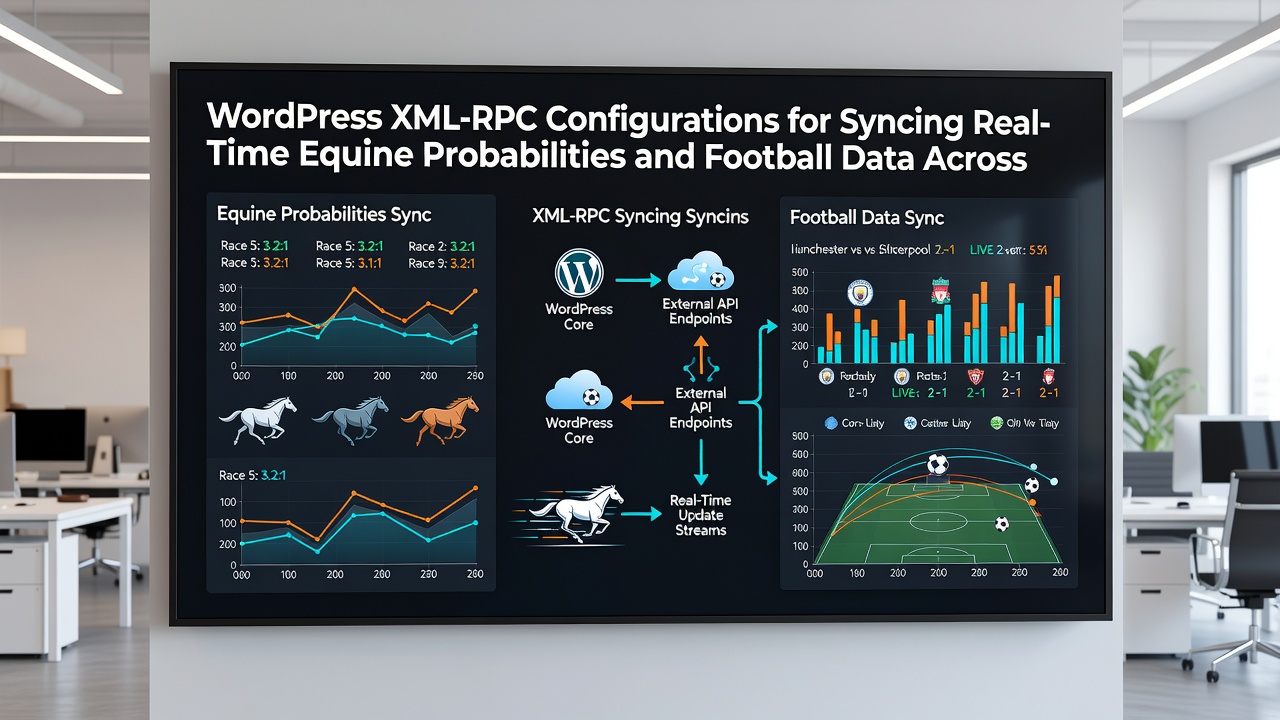
Network teams apply filters via the xmlrpc_enabled hook to limit exposure while preserving data exchange capabilities, and they often combine this with rate-limiting plugins that track request volumes from known data sources. The second image appears here to illustrate a sample configuration interface used in production environments.
Performance logs reveal that optimized servers process several hundred simultaneous requests during major football fixtures or horse racing festivals, and caching layers store probability snapshots to reduce direct database hits. According to figures released by the European Gaming and Betting Association, platforms using refined XML-RPC setups reported lower latency compared with REST-only alternatives in multi-operator environments.
Monitoring and Maintenance Protocols
System administrators schedule regular audits of XML-RPC logs to identify unusual traffic patterns, while automated scripts verify that equine and football data remain synchronized across connected sites. Updates in August 2026 introduced enhanced logging options that capture full request payloads for compliance reviews without storing sensitive authentication details. Those managing UK wagering networks often discover that combining XML-RPC with webhook fallbacks creates redundancy, ensuring continuous data delivery even when one protocol encounters temporary interruptions.
Conclusion
WordPress XML-RPC configurations continue to support real-time equine probability and football data exchange when operators apply targeted method restrictions, authentication controls, and performance tuning. Regulatory data and technical documentation confirm that these setups integrate effectively within broader wagering infrastructures across multiple jurisdictions. Ongoing refinements keep synchronization reliable as network demands evolve.